
What Once Was
Memories of a visit come to mind—a place that felt simple and, in some way, remote. But not remote in the usual sense of the word; it was something different.

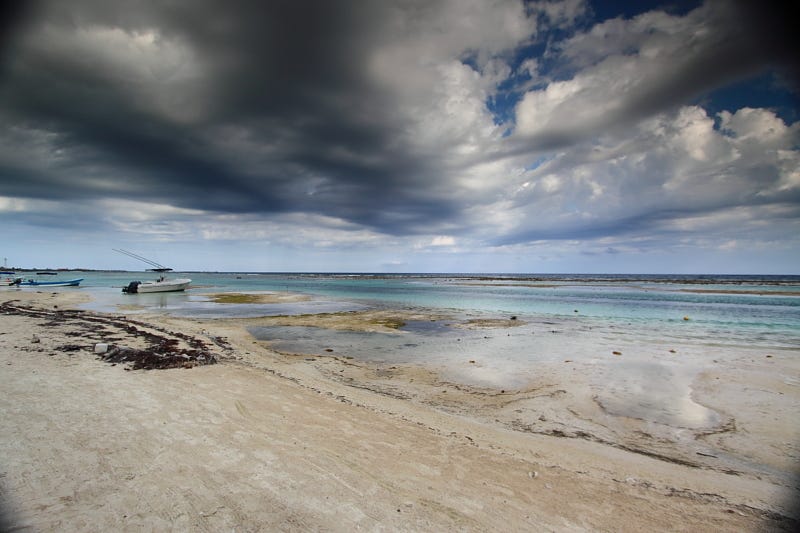
(Spanish version: Lo que una vez fue)
The first time I visited Mahahual1, I was genuinely surprised. I had heard of it almost like a whisper. "Have you ever been to Mahahual?" more than one person had asked me. And the general advice was that I should set aside some time to visit, enjoy the sea, maybe spend a weekend there—but not much more.
But just a weekend? It always throws me off a little when someone says there's “nothing there” or that a weekend is enough. Why, though?
Trying to fully understand what’s behind a “there’s nothing there” isn’t easy—and probably can’t be explained the same way for everyone. Still, recommending a place where "there’s nothing" and suggesting just a short visit seemed to go against the very idea that, at least for me, inspires a journey.
I don't want to come across as someone who just doesn’t get it. But honestly, it's hard for me to imagine recommending a place and immediately warning someone not to expect much because, well, there’s nothing.
If you're the kind of traveler who enjoys places off the beaten path, you probably already know: a place where there’s “nothing” often means it has everything—everything that hasn’t yet been seen, touched, or exploited by mass tourism.
It may also depend on the country you live in, but today, places where "there’s nothing" are becoming harder and harder to find. Maybe it’s because of safety concerns that make it unwise to venture too far. Or maybe it's the difficulty of the terrain, the limitations of your vehicle, or even your own health that might prevent you from reaching such places.
But mostly, places like that are disappearing—falling to trends, mass tourism, the exploitation of natural areas for resource extraction, land sales, or simply the effects of climate change. One reason, or a combination of many, continues to chip away at the wild, untouched parts of our planet.
Mahahual was never the most remote place. Even back then—many years ago—it wasn’t a place where there was truly "nothing" (though there was very little). It wasn’t the world’s best-kept secret either.
Still, it was beautiful. Removed from the noise (aside from the occasional cruise ship that would sometimes arrive), free from mass tourism and trends.
It was the natural gateway to Banco Chinchorro—the second-largest coral reef system in the world. Back then, there were no chain hotels, no towering buildings, no aggressive street vendors. Just a handful of people who had made it their temporary or semi-permanent home. People for whom "nothing" meant everything: isolation, silence, peace.
It was one of those rare places where I truly lost track of time and days. And I miss it.
Though, as it’s often said, we only truly miss what no longer exists.
Mahahual, Quintana Roo (Mexico). I visited it back in 2010, when—although already a stop for some cruise ships—it remained mostly untouched, frequented only by a few: locals from nearby towns and the occasional traveler in search of places off the traditional tourist radar.